
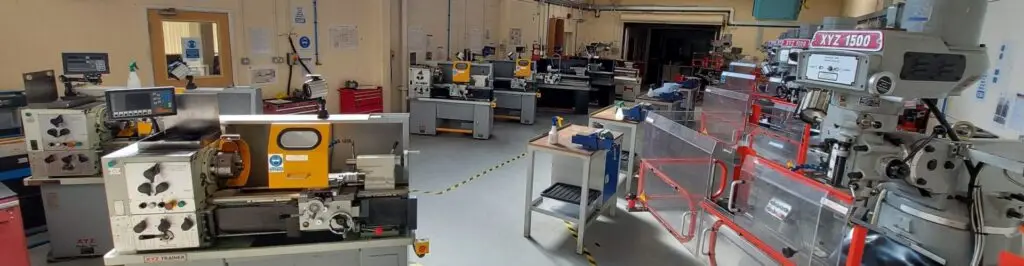
On a site visit this week, I was performing an audit of equipment and procedures for which I need to create risk assessments.
As a part of the process, I took many pictures of the equipment I will be risk assessing.
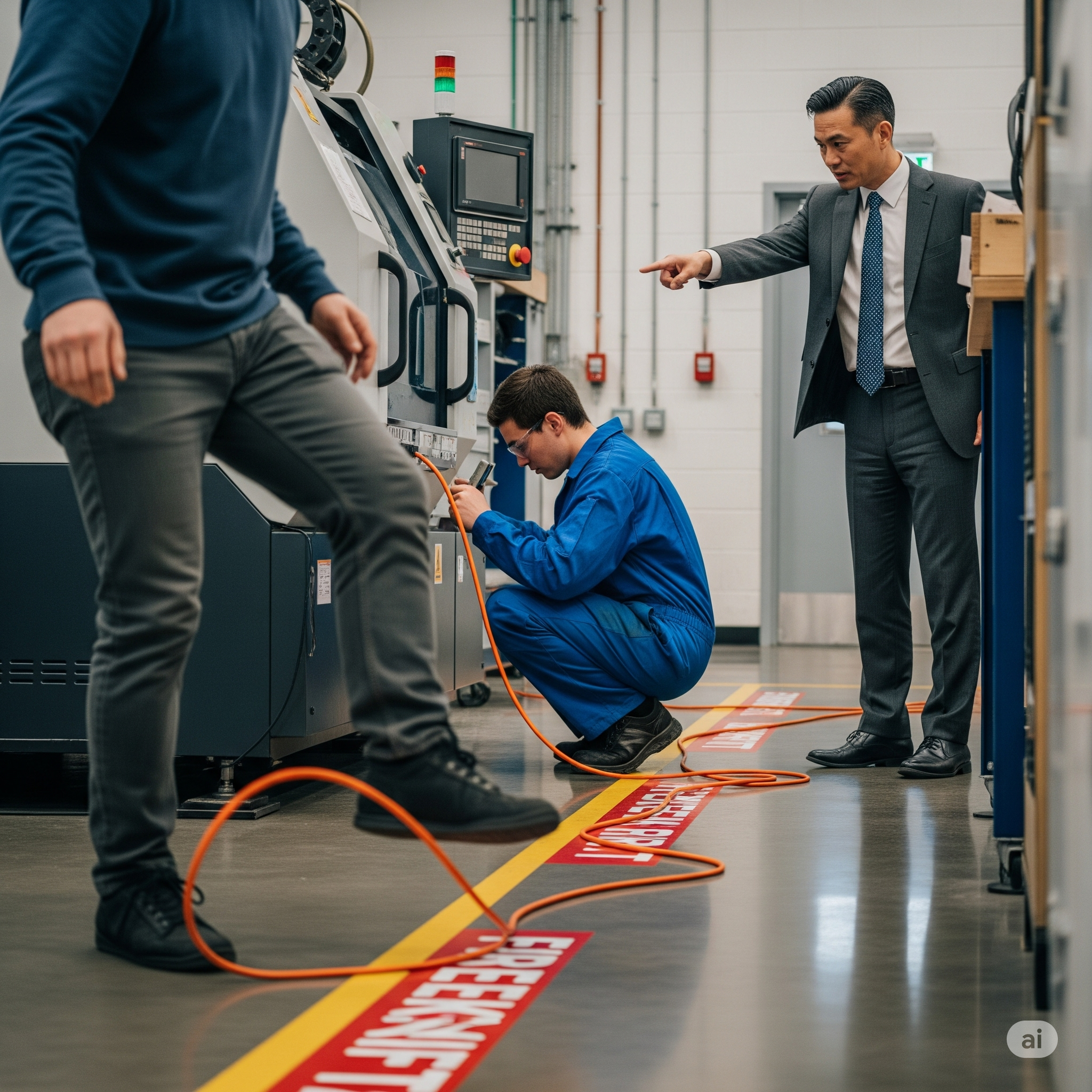
As I walked past an area where an item of equipment was being worked on, I noticed there was an electrical lead trailing across the floor.
I photographed the trailing lead while photographing the item to be risk assessed.
There was a comment £”(£!^& health and safety trying to stop work again.
I went to the chap who commented and asked what I had done to warrant that comment.

He said, “I’m working on it, I will be back there in a minute”.
This confused me a bit. “What have I done that stopped you from being able to work?”.
He responded, “I could see you photographing the lead, I’m working on it”.
Unprompted, he proclaimed, “I know it’s a trailing lead across a fire escape route, and it may cause people to trip in an emergency evacuation, but I’m working there”.
This was quite interesting (possibly only interesting to a Health and Safety Advisor), he had indicated why the situation could have had a far from desirable outcome.
So I asked him what taking a photograph of a lead could do to stop him working.
He said I was going to get him into trouble with his supervisor,
I asked him why I would want to get him into trouble. My job is to keep people safe, not give people a roasting.
What would reporting have got me?
- Paperwork, a form to fill out and explain the circumstances to his manager
- A manager needing to take time out their busy schedule to deal with the issue
- A peeved-off member of staff just trying to do his job
- A possible investigation and a reprimand for the member of staff
- A staff member who would be wary when I am on site
- A member of staff who will do everything right while I am there
- A member of staff who will try to hide mistakes instead of accepting and dealing with them
- A member of staff who will be less inclined to come to me for support
What would I lose?
- Any credibility of offering a supporting role
- The possibility of seeing how they actually work
- The chance of getting to know about problems in the early stages
- The option to help staff with their problems
- The trust of the very people who make Health and Safety possible
- The possibility of losing support from the rest of the staff.
- Trust, Trust and Trust are the most crucial tools in a Health and Safety Advisor’s toolbox

As a Health and Safety advisor, we strive to create a culture that promotes honesty, staff are not the problem they are the solution.
In the early days of Health and Safety, there was a blame culture, find out who did it wrong and what we can do to make sure he/she doesn’t do it again.
Don’t get me wrong, some advisors and companies still subscribe to that way of thinking.
With the incident above all is not black and white!
1/ I was taking a photo for my own reference, to aid me in creating my risk assessments.
2/ There was a need for the engineer to do his job where it was located.
3/ was the lead trailing across the walkway, the engineer’s fault, a problem with the layout of the workshop, a failure in the work instruction, etc?
There are very often many root causes and very rarely a single reason for failure. When you understand that, you can find a way to prevent or minimise the issue from recurring.
I spoke to him and told him I wouldn’t be reporting him for anything unless it was deliberate, malicious or negligent and had the potential to cause serious harm.
I told him I would never betray his trust. If there was something he wanted me to rectify without risk of incriminating himself, I would speak to the management without mentioning my source for the concern.
I was speaking to another guy about wearing filters when spray painting, later I went into his workshop just as he blew the dust off a component with an air hose, he quickly apologised, I was not sure why he apologised to me, its his wife, kids and grand kids he needs to apologise to, they are the people wo will be looking after him if he gets Chronic obstructive pulmonary disease (COPD)
Health and safety is there to keep you safe, not to stop work from getting done. It has moved on over the years, and BEMA Health and Safety lead the way!



Leave a Reply