
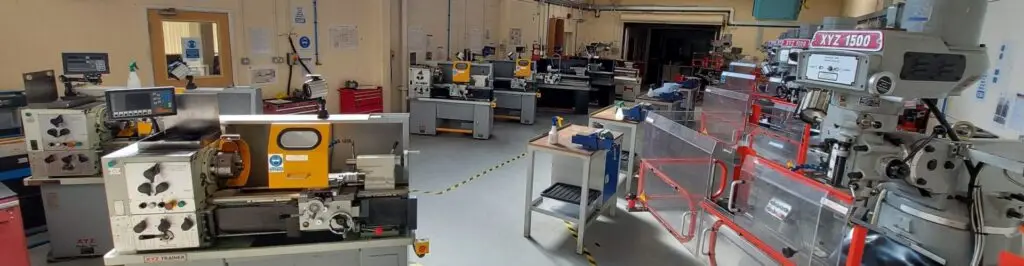

A Critical Update for the Motor Vehicle Repair Businesses
The HSE Campaign is On: Protect Your Lungs Now!
The Health and Safety Executive (HSE) is currently running a crucial campaign to tackle work-related lung diseases, with businesses in the metalworking and finishing sectors a key focus. Why? Because the coatings and materials used daily expose workers to one of the most dangerous respiratory sensitisers: Isocyanates.
If your work involves two-pack (2K) paints, lacquers, coatings, or spray foams, you are working with Isocyanates. A single high exposure or repeated low-level exposure can lead to severe, irreversible occupational asthma.
What are Isocyanates and Where Are They Hiding?
Isocyanates are highly reactive chemicals commonly found in:
- Vehicle and Component Refinishing: The hardener component in 2K paints and clear coats used for durable, high-gloss finishes on metal parts and vehicles.
- Adhesives and Sealants: Used in various bonding applications.
- Insulation Foams: Sprayed polyurethane foams and rigid resins.
When these materials are sprayed, heated, or mixed, invisible aerosol mist and vapour containing Isocyanates are released into the air—the primary pathway into the lungs.
The Danger: Occupational Asthma is PERMANENT
Exposure to Isocyanates is particularly hazardous because it can lead to sensitisation. Once sensitised, even exposure to minute quantities of the chemical can trigger a severe asthma attack.
- Symptoms: Wheezing, shortness of breath, chest tightness, and coughing, which may worsen after leaving work.
- Irreversibility: Occupational asthma is often irreversible, meaning you can be forced to change careers or live with a debilitating lung condition for life.
The Solution: Controlling the Risk (HSE’s Priority)
The HSE campaign emphasises that personal protective equipment (PPE) is the last line of defence. The focus MUST be on engineering controls.
1. Engineering Controls (Priority)
| Control | Action |
| Spray Booths/Rooms | Ensure spray booths are designed for Isocyanate use, are fully enclosed, and are maintained with adequate airflow and extraction (LEV). |
| Air Supply | Use air-fed respiratory protective equipment (RPE) when spraying 2K paints—this is often the ONLY way to be fully protected. |
| Designated Areas | Mixing of Isocyanate materials must take place in dedicated, well-ventilated areas away from general staff. |
2. Health Surveillance and Biological Monitoring (MANDATORY)
Health surveillance is a legal requirement for workers exposed to Isocyanates.
- Who Needs Monitoring? This applies not only to the paint sprayers but also to workers nearby (e.g., in the mixing room, preparation area, or adjacent workshops) who may be exposed to overspray or fumes.
- What Does it Involve? This involves biological monitoring (such as urine sampling to measure Isocyanate metabolites) and regular lung function testing (Spirometry) to catch early signs of occupational asthma before irreversible damage occurs.
3. Safe Working Practices
- Training: Ensure all staff are trained in the risks, the symptoms of asthma, and the correct emergency procedures.
- Fit Testing: Ensure all tight-fitting RPE has been face-fit tested to guarantee a perfect seal against the face.
HSE Action Points for Management
- Review Your COSHH Assessments: Update your assessments, specifically focusing on Isocyanates in coatings and foams.
- Check Ventilation (LEV): Ensure your spray booths and extract systems are regularly maintained and tested (at least every 14 months) by a competent person.
- Book Health Surveillance: Immediately arrange for biological monitoring and lung function tests for all workers potentially exposed to Isocyanates.
Protecting your team’s lung health is a legal and moral obligation. Let’s make sure everyone goes home breathing easy.



Leave a Reply